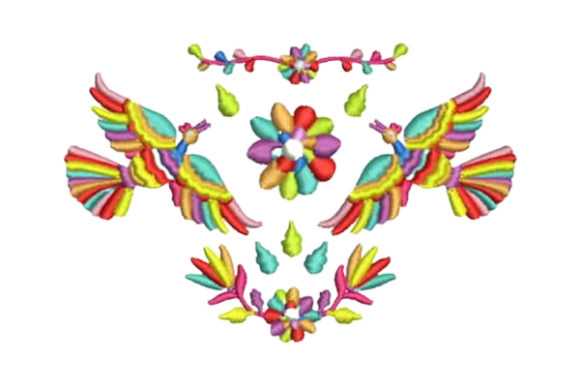
A Designer’s Honest Review of Otomi Embroidery
Whenever I open a new embroidery design file, my first thought isn’t about the technical specs. It’s about the story it tells and the product it could become. The Otomi design immediately pulls you into that world. It feels vibrant, celebratory, and deeply rooted in a rich craft tradition. The layout isn’t just a pattern; it’s a composition. You get a sense of balance and artistry that translates beautifully into satin stitch work. It has a personality that’s both bold and intricate, making it perfect for projects where you want the embroidery to be the focal point, not just an accent.
The Moment It Stitches Out: Visual Impact in Real Projects
I envisioned this design on a natural canvas tote bag for a boutique client. That’s my real-life test scenario. On a screen, a design can look flat, but once stitched, it gains texture and dimension. The Otomi design, with its emphasis on beautiful satin stitches, would create a luxurious, tactile surface. On that tote, it wouldn’t just be a decoration; it would feel like a piece of art, elevating a simple bag into a statement piece. This is crucial for small shop products and Etsy listings where visual appeal directly translates to perceived value and customer engagement.
The same principle applies across categories. On a linen pillow cover, it becomes sophisticated home decor. Embroidered onto a high-quality sweatshirt, it moves into the realm of custom apparel with serious giftability. For a baby item, like a blanket or a romper, it offers a unique, handmade presentation far beyond generic prints. The design carries a recognition factor—it’s clearly inspired by Mexican embroidery—which adds a layer of authenticity and storytelling to your finished product.
Where This Design Finds Its Best Home
For crafters and creative entrepreneurs, choosing the right product for your design is half the battle. The Otomi design naturally belongs to items with a generous, stable surface. Think tea towels, apron fronts, pillow covers, and the backs of denim jackets. These are projects where the detail can shine without compromise. It would also make an stunning, stand-alone embroidered patch, which could then be applied to anything, offering fantastic flexibility for your craft business.
For apparel decorators, I’d lean towards stable, medium-weight fabrics. A structured cotton cap would work better than a stretchy baseball hat. On t-shirts, placement is key—you’d want a larger, flat area like the full back or a pocket, avoiding curved seams. The density and likely detail level mean it will hold up beautifully to washing on household items like kitchen towels or blankets, provided the right stabilizer and threads are used.
Practical Considerations for a Professional Finish
Confidence in your embroidery project comes from preparation. This isn’t a design you should run straight onto a client’s item. My first step would always be to stitch it out on a scrap of the actual project fabric. This tells you everything: how the thread colors interact with your background, whether the stitch density feels right for the fabric texture, and if any tiny details get lost. Testing on both light and dark fabric backgrounds is essential, as the color palette will react differently.
Hoop size is a critical, unmentioned spec here. The design’s composition suggests it needs space to breathe. I wouldn’t try to cram it into a small hoop. You need to confirm the required hoop size from the provided files to ensure your machine can handle it and the design doesn’t become distorted. Similarly, check the specific embroidery file formats included to guarantee compatibility with your machine. Using proper stabilizer is non-negotiable, especially if you’re working on thinner or stretchy fabrics, to maintain that crisp satin stitch definition.
Navigating Commercial Use and Customer Trust
For digital product sellers and small business owners using designs for commercial embroidery, licensing is the bedrock of professionalism. The product description states it can be used in projects, but you must confirm the exact license terms. Does it allow for selling the finished physical products—like your embroidered tote bags or baby clothes? Can you use it in printable mockups for your digital shop? Clarifying this before you sell anything protects your business and builds customer trust in your brand consistency.
When you offer a product embroidered with a design like this, it communicates care and quality. A customer receiving a personalized gift or purchasing from your handmade shop sees the complexity and knows it wasn’t mass-produced. This enhances buyer engagement and turns a simple transaction into an appreciation for craftsmanship.
Where to Exercise a Bit More Caution
Even gorgeous designs have their limits. The Otomi design, with its likely intricate elements and satin stitch areas, requires a thoughtful approach on certain surfaces. Textured fabrics like boucle or thick terry cloth might obscure the clarity. Very thin fabrics may struggle with the stitch density without the correct stabilizer combo. On curved surfaces like caps, detailed corners might puckering if not meticulously hooped and stabilized.
Also, consider the end-use. For items that will undergo frequent, harsh washing—like a chef’s apron—you’d want to test durability thoroughly. For dark fabric backgrounds, your thread color choices become paramount to maintain contrast and visual impact. In all these cases, the design itself is capable, but the embroiderer’s skill and preparation dictate the final, professional outcome.
Final Designer Notes Before You Hoop
Before I commit any design to a real project, I run a mental checklist. For the Otomi design: test on scrap, confirm hoop size, review stitch density by stitching it out, inspect the small details in the actual embroidery file, and absolutely verify licensing for commercial use if that’s your goal. Use the multiple embroidery file formats provided to check compatibility. Think about how it will look not just in color, but in black and white mockups for your listings—does the form hold up?
This machine embroidery design is a powerful design asset. It has the character to transform a basic item into a cherished handmade product. By approaching it with this practical, realistic mindset—understanding where it shines and where it needs your supportive expertise—you can create finished products that truly reflect the beauty and craftsmanship inherent in the Otomi design itself.